DOJ Tightens FARA Enforcement: What You Need to Know
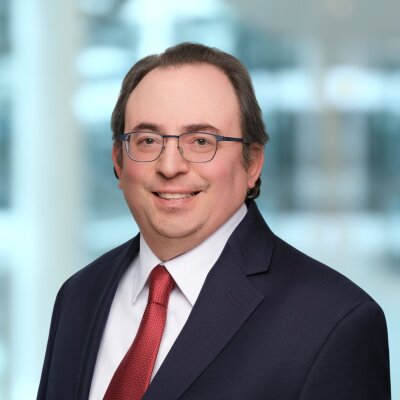
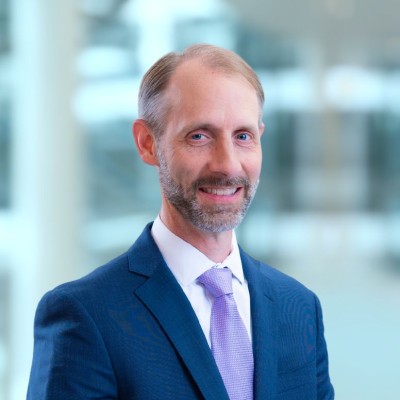
By: Robert Cohen, Matthew Petersen, and Ryan Burbage
Recent enforcement activity suggests that the Department of Justice (DOJ) is taking an increasingly aggressive approach to the Foreign Agents Registration Act (FARA) and related federal statutes governing foreign influence and foreign-government advocacy in the United States. These developments serve as an important reminder that individuals and organizations engaged in advocacy, public relations, consulting, and other activities connected to foreign principals should carefully evaluate whether they may have disclosure or registration obligations under federal law.
Background
FARA requires agents of foreign principals to register and disclose their activities and financial arrangements with foreign principals. Under the law, “foreign principals” includes foreign governments, political parties, individuals, corporations, and other commercial entities. An agent or representative of any of these entities is required to register if they: 1) engage in political activities for the foreign principal; 2) acts as the foreign principal’s public relations counsel, publicity agent, information-service agent, or political consultant within the United States; 3) solicits, collects, disperses, or dispenses money for the foreign principal within the United States ; or 4) represents the foreign principal before a United States official or agency. Noncompliance can carry serious civil and criminal penalties. Willful violations, false statements, or omissions of material facts carry a maximum criminal penalty of a fine up to $250,000 or imprisonment for up to five years.
18 U.S.C. § 951is a related statute that applies to individuals who act in the United States subject to the direction or control of a foreign government or foreign-government official without first notifying the Attorney General. Unlike FARA, which is primarily a disclosure and transparency law, § 951 is generally treated as a national-security and counterintelligence statute and is often used in cases involving alleged covert or undisclosed foreign-government activity. Violations can carry significant criminal penalties, including fines and imprisonment of up to 10 years.
Shifting Enforcement Landscape
In February 2025, then-Attorney General Pam Bondi issued a memorandum indicating that criminal investigations under FARA would focus on matters resembling espionage and instructing the FARA Unit to focus on civil enforcement and public guidance. This shift in focus appeared to lessen FARA-related risks.
Months later, in September of 2025, President Trump issued National Security Presidential Memorandum 7 (NSPM‑7)—a far-reaching strategy to investigate groups involved in promoting domestic political violence. Among other things, it directed the administration to investigate and prosecute entities that may be violating FARA.
Recent DOJ enforcement actions demonstrate that foreign-influence enforcement remains an active priority. In May 2026, former Representative David Rivera was convicted on FARA and related money-laundering charges arising from a secret lobbying campaign on behalf of Venezuelan interests tied to the Maduro government. Prosecutors alleged that Rivera received millions of dollars to lobby U.S. officials and influence U.S. policy toward Venezuela without registering under FARA. In another high-profile case, Pras Michel was sentenced in November 2025 to 14 years in prison after being convicted on multiple federal charges, including acting as an unregistered agent of foreign interests in connection with alleged influence campaigns tied to Malaysian financier Jho Low and Chinese government interests. More recently, former Arcadia, California mayor Eileen Wang agreed to plead guilty to violating 18 U.S.C. § 951 by acting in the U.S. under the direction and control of officials connected to the People’s Republic of China without notifying the Attorney General. According to prosecutors, Wang participated in efforts to advance PRC government messaging and influence activities in the country.
FARA Compliance
If you believe your activities may implicate FARA’s requirements, you should promptly consult experienced legal counsel to assess whether you may qualify as an “agent of a foreign principal” under the statute. Even where FARA potentially applies, the law contains several important exemptions that may eliminate the need to register and report. For example, persons registered under the Lobbying Disclosure Act (LDA) generally are exempt from FARA when advocating on behalf of foreign interests, though that exemption does not apply where the foreign principal is a foreign government or foreign political party. Likewise, attorneys representing foreign clients before U.S. courts or government agencies ordinarily are exempt when providing traditional legal representation; but that exemption generally does not extend to lobbying, media outreach, or public relations activities undertaken on a client’s behalf.
FARA also contains exemptions for (1) certain nonpolitical activities conducted in furtherance of a foreign principal’s bona fide commercial interests, provided those activities are not directed by a foreign government or political party, and (2) bona fide religious, academic, scholarly, scientific, or artistic activities. Importantly, however, the burden falls on the individual or entity claiming an exemption to establish that the exemption applies. Given the breadth and complexity of FARA—and DOJ’s increasingly aggressive enforcement posture—obtaining knowledgeable legal guidance early can help individuals and organizations identify potential obligations, evaluate available exemptions, and avoid costly compliance or enforcement issues.
How Holtzman Vogel Can Help
Holtzman Vogel’s experienced FARA practitioners are uniquely situated to help you navigate the complexities of FARA and maintain compliance. Our team of experienced lawyers regularly advises law, lobbying, consulting and other organizations on FARA compliance. We can review engagements, assist you as your registration counsel, perform compliance audits, and provide legal representation in matters before the DOJ.
For more information or assistance, please reach out to Robert Cohen, Kellen Dwyer, Matt Petersen or Jason Torchinsky.